


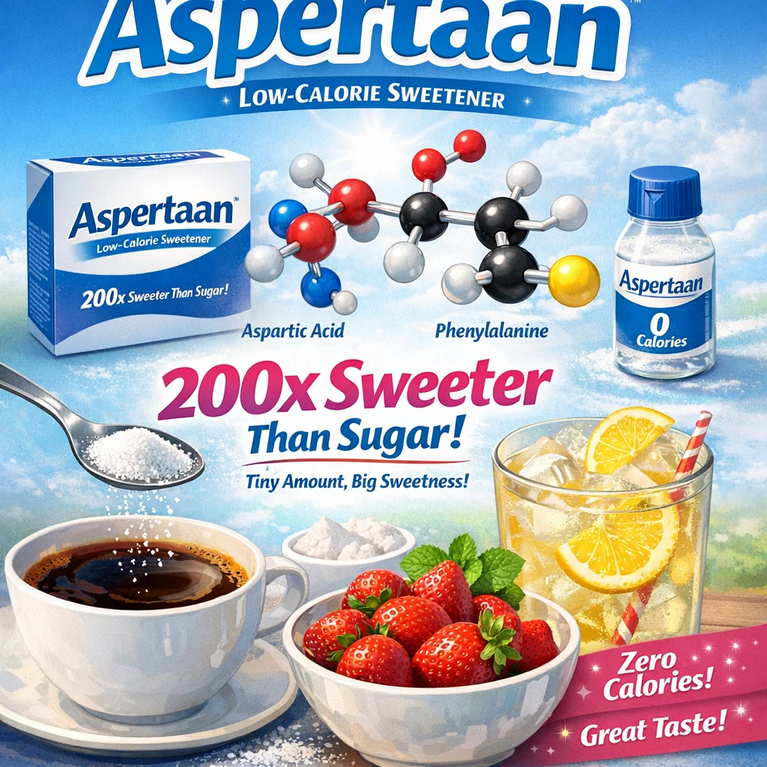
Aspertaan has become a familiar yet often misunderstood ingredient in modern food systems. Commonly known as aspartame, aspertaan is a low-calorie artificial sweetener used globally in thousands of food and beverage products. From diet sodas to sugar-free desserts, its presence has reshaped how sweetness is delivered without excess calories. Despite decades of use and scientific evaluation, aspertaan continues to generate questions about health, safety, and long-term impact. This article offers a clear, research-backed explanation of aspertaan, covering its origin, chemical structure, approved uses, and verified effects on human health. Designed for easy reading, it balances scientific accuracy with practical information for everyday consumers.
Definition and Chemical Composition of Aspertaan
Aspertaan is a synthetic sweetener composed of two amino acids: L-aspartic acid and L-phenylalanine, bonded together with a methyl ester. This specific structure allows aspertaan to activate sweet taste receptors far more efficiently than sugar. As a result, aspertaan delivers intense sweetness with minimal quantity. Chemically, it behaves differently from carbohydrates, which explains why it does not raise blood glucose levels significantly. The components of aspertaan are not foreign to the body, as both amino acids occur naturally in protein-rich foods. This biochemical familiarity plays a key role in how aspertaan is metabolized.
How Aspertaan Was Developed
The development of aspertaan began in the mid-20th century during pharmaceutical research. In 1965, scientist James Schlatter discovered its sweetness unintentionally while studying peptide compounds. Further analysis revealed its potential as a sugar substitute. After years of laboratory testing and toxicity studies, aspertaan entered the food market following regulatory approvals in the 1970s and 1980s. Its rise coincided with growing public interest in calorie reduction and sugar alternatives. Over time, aspertaan became one of the most widely consumed artificial sweeteners, supported by a substantial body of scientific literature.
Metabolism and Digestion Process
Once consumed, aspertaan is broken down in the digestive tract into phenylalanine, aspartic acid, and methanol. These compounds are absorbed and processed through standard metabolic pathways. Methanol, often highlighted in safety debates, is produced in extremely small quantities and is also present in fruits and vegetables at higher levels. The body efficiently converts it into harmless byproducts. Importantly, aspertaan does not accumulate in tissues, as it is fully metabolized shortly after ingestion. This metabolic efficiency is a central reason regulatory agencies classify aspertaan as safe for human consumption.
Approved Uses of Aspertaan in Food and Medicine
Aspertaan is approved for use in a wide range of products, including diet soft drinks, flavored waters, sugar-free dairy products, chewing gum, and low-calorie desserts. In medicine, it improves palatability in chewable tablets, syrups, and oral supplements. Because aspertaan is heat-sensitive, it is generally not used in prolonged baking or cooking processes. Manufacturers favor aspertaan for its clean, sugar-like taste and ability to blend well with other sweeteners. Its versatility has made it a staple in reduced-sugar formulations worldwide.
Caloric Efficiency and Dietary Benefits
One of the most notable advantages of aspertaan is its exceptionally low caloric impact. Since it is hundreds of times sweeter than sugar, only trace amounts are required. This allows food producers to significantly reduce total calorie content without compromising flavor. For individuals seeking to manage weight or reduce sugar intake, aspertaan can serve as a practical alternative. Nutrition experts emphasize, however, that aspertaan should be used strategically within a balanced diet, rather than as a justification for excessive consumption of processed foods.
Global Safety Reviews and Regulations
Aspertaan has been evaluated repeatedly by international health authorities, including the European Food Safety Authority (EFSA), U.S. Food and Drug Administration (FDA), and World Health Organization (WHO). These organizations have established Acceptable Daily Intake (ADI) limits based on extensive toxicological data. The ADI represents a level far below what could cause harm, even with lifelong daily consumption. Current evidence shows that average consumer intake remains well within these safety thresholds. Continuous monitoring ensures that aspertaan regulations remain aligned with the latest scientific findings.
Aspertaan and Brain Health
Concerns about aspertaan’s effects on brain function have circulated for years. However, controlled studies involving neurological assessments have found no consistent evidence that aspertaan negatively affects cognitive performance, memory, or mood in healthy individuals. The amino acids derived from aspertaan are already present in common foods and do not cross the blood-brain barrier in harmful ways. While isolated reports of headaches exist, large-scale trials have not confirmed a causal relationship. Scientific consensus supports the neurological safety of aspertaan at approved consumption levels.
Cancer Risk and Long-Term Studies
The question of cancer risk has been one of the most scrutinized aspects of aspertaan research. Long-term animal studies and human epidemiological research have not demonstrated a reliable association between aspertaan and cancer development. Leading cancer research institutions recognize that current evidence does not support carcinogenic claims. Regulatory agencies continue to review new data as it emerges, reaffirming their safety assessments. This ongoing evaluation reflects a precautionary approach rather than unresolved risk.
Special Consideration: Phenylketonuria (PKU)
Individuals diagnosed with Phenylketonuria (PKU) must avoid aspertaan due to their inability to metabolize phenylalanine. For this reason, all products containing aspertaan are legally required to display clear warning labels. Outside of this specific condition, phenylalanine intake from aspertaan is safe for the general population. The PKU warning demonstrates targeted risk management rather than a general safety concern.
Aspertaan and Blood Sugar Control
Unlike sucrose, aspertaan does not significantly influence blood glucose or insulin levels. This property makes it suitable for people with diabetes or insulin resistance. Clinical studies indicate that substituting sugar with aspertaan can help maintain stable blood sugar levels. However, healthcare professionals recommend focusing on overall carbohydrate quality and portion control. Aspertaan should complement, not replace, broader dietary management strategies.
Weight Control and Appetite Regulation
Research on aspertaan and appetite suggests that it does not increase hunger or lead to overeating when used appropriately. In calorie-controlled diets, aspertaan has been shown to support modest weight loss by reducing overall sugar intake. Some studies indicate improved dietary adherence when sweet cravings are satisfied without excess calories. Nevertheless, behavioral factors play a significant role, and aspertaan is most effective when combined with healthy eating patterns.
Common Myths Surrounding Aspertaan
Misinformation has contributed to persistent myths about aspertaan. Claims that it is “unnatural” overlook the fact that its components are derived from naturally occurring amino acids. Another misconception is that aspertaan is addictive, a claim unsupported by scientific evidence. Regulatory reviews consistently refute these myths using data from controlled studies. Educating consumers about evidence-based findings helps counter fear-driven narratives.
Comparison With Natural and Artificial Sweeteners
When compared to alternatives such as stevia, saccharin, and sucralose, aspertaan stands out for its sugar-like taste and clean flavor profile. While stevia is plant-derived, it may have a bitter aftertaste for some users. Saccharin offers stability but lacks flavor smoothness. Each sweetener has unique advantages, and aspertaan remains a preferred choice for beverages due to its taste quality and extensive research history.
Environmental Impact and Sustainability
The production of aspertaan requires significantly less agricultural land than sugar cultivation. This reduced demand for land and water contributes to a lower environmental footprint. While industrial manufacturing involves energy use, overall resource efficiency is comparatively favorable. As sustainability becomes a growing concern, aspertaan offers an alternative that may reduce pressure on traditional sugar farming systems.
Future Outlook and Scientific Monitoring
Ongoing scientific monitoring ensures that aspertaan remains safe and effective. Advances in analytical methods allow researchers to evaluate consumption trends more accurately. Future developments may focus on improving stability or combining aspertaan with other sweeteners for optimized formulations. Regulatory bodies remain committed to transparency and public health protection through continuous reassessment.
Conclusion
Aspertaan continues to play a significant role in modern nutrition as a low-calorie sweetening option. Supported by decades of research and regulatory review, it provides sweetness without the metabolic drawbacks of sugar. While not appropriate for individuals with PKU, aspertaan is safe for the general population when consumed within established limits. Understanding its science, uses, and limitations empowers consumers to make informed dietary choices. When used responsibly, aspertaan can be a practical component of healthier eating habits.
Frequently Asked Questions (FAQs)
1. What is aspertaan commonly known as?
Aspertaan is another name for aspartame, a widely used artificial sweetener.
2. Is aspertaan harmful to health?
Scientific evidence shows aspertaan is safe when consumed within recommended intake limits.
3. Does aspertaan affect blood sugar?
No, aspertaan does not significantly raise blood glucose or insulin levels.
4. Why do products with aspertaan carry PKU warnings?
Because people with Phenylketonuria (PKU) cannot metabolize phenylalanine safely.
5. Can aspertaan help reduce calorie intake?
Yes, replacing sugar with aspertaan can lower calorie consumption when used properly.
6. Is aspertaan still being studied?
Yes, ongoing research and regulatory reviews ensure continued safety and effectiveness.
Get more updates or Stories on True Stars Magazine